Overview:
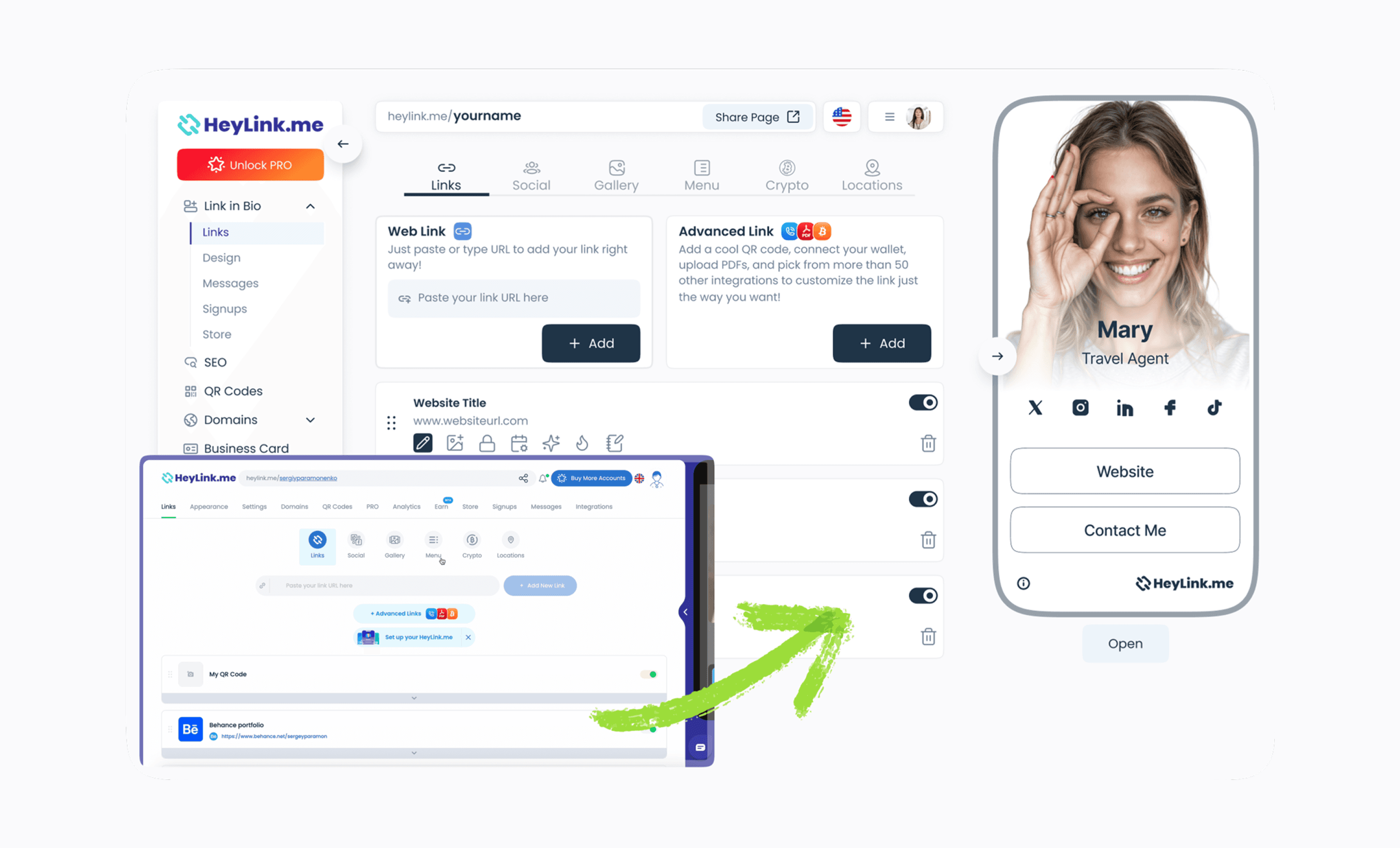
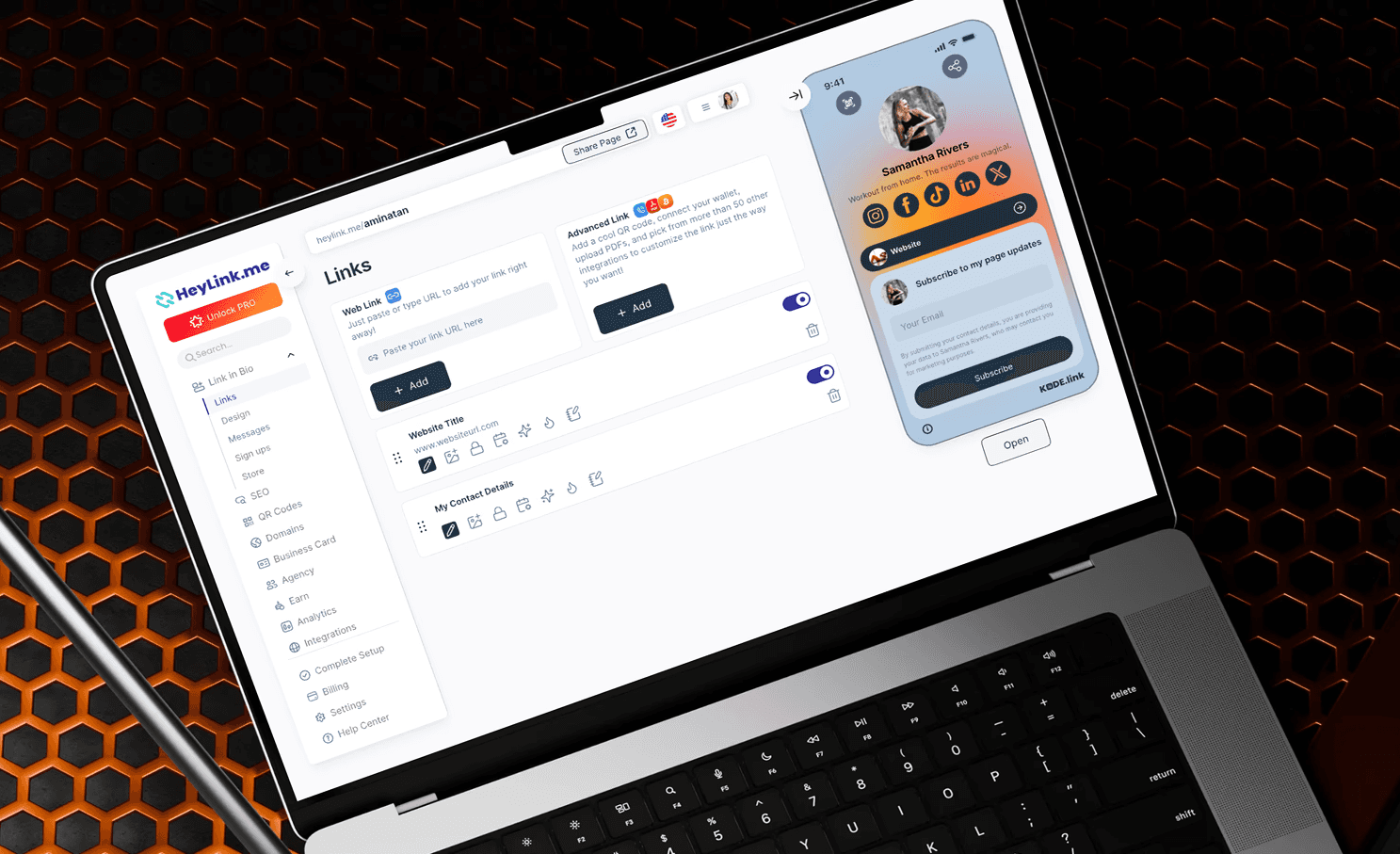
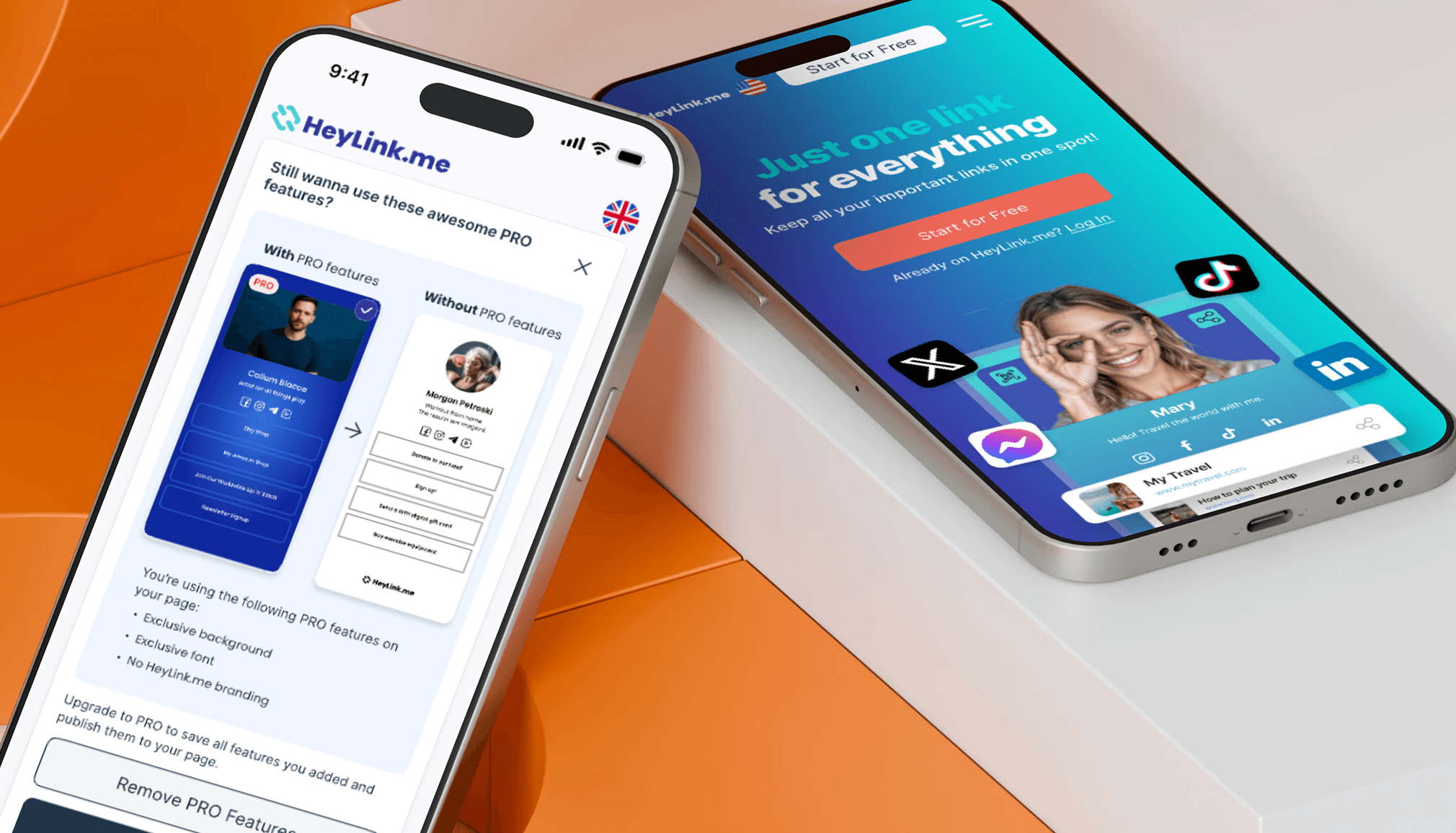
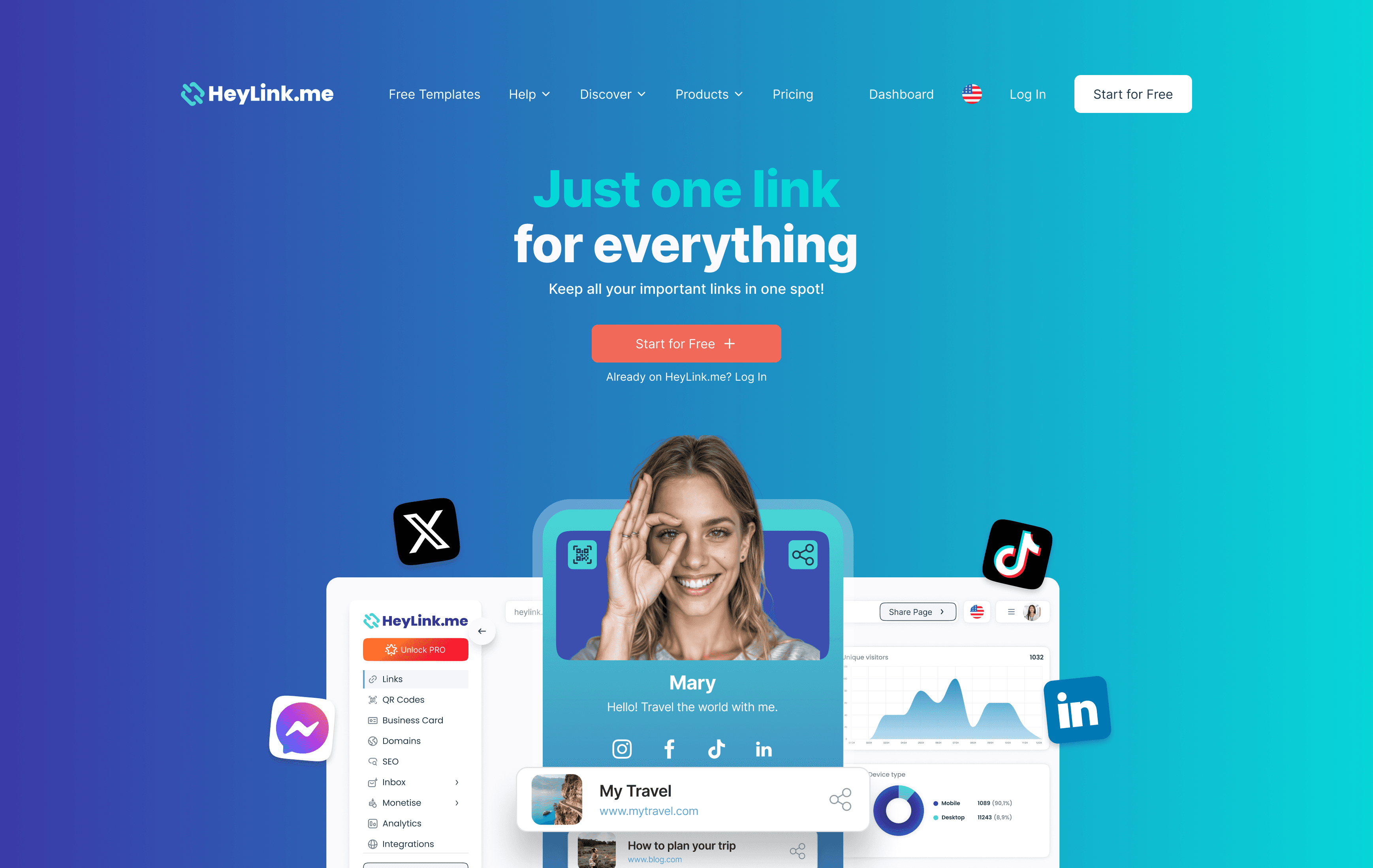
HeyLink.me (Product of Persollo) is a popular link-in-bio platform that allows influencers, brands, and creators to manage their social media landing page. As the product designer on this project since mid-2024, I led the end-to-end design of new features and refinements for its web interface. My goal was to help users customize their profiles easily and engage their audience more effectively.
Problem
High user drop-off during onboarding and low completion of profile setup. HeyLink.me allows creators and brands to build customized landing pages with links, social media, and other digital content. However, when I joined the project, the analytics showed that a significant percentage of users abandoned the onboarding process before completing their profile. Many also failed to add meaningful content to their pages, limiting the platform’s overall value and user retention.
Solution
Research & Diagnosis I started by analyzing behavior flow in analytics tools and reviewing heatmaps and drop-off points during onboarding. Then I ran a short usability test with new users and gathered feedback from support tickets. The core issues were:
1. Too many steps in the onboarding flow
Lack of contextual guidance or previews
Overwhelming UI for first-time users, especially on mobile.
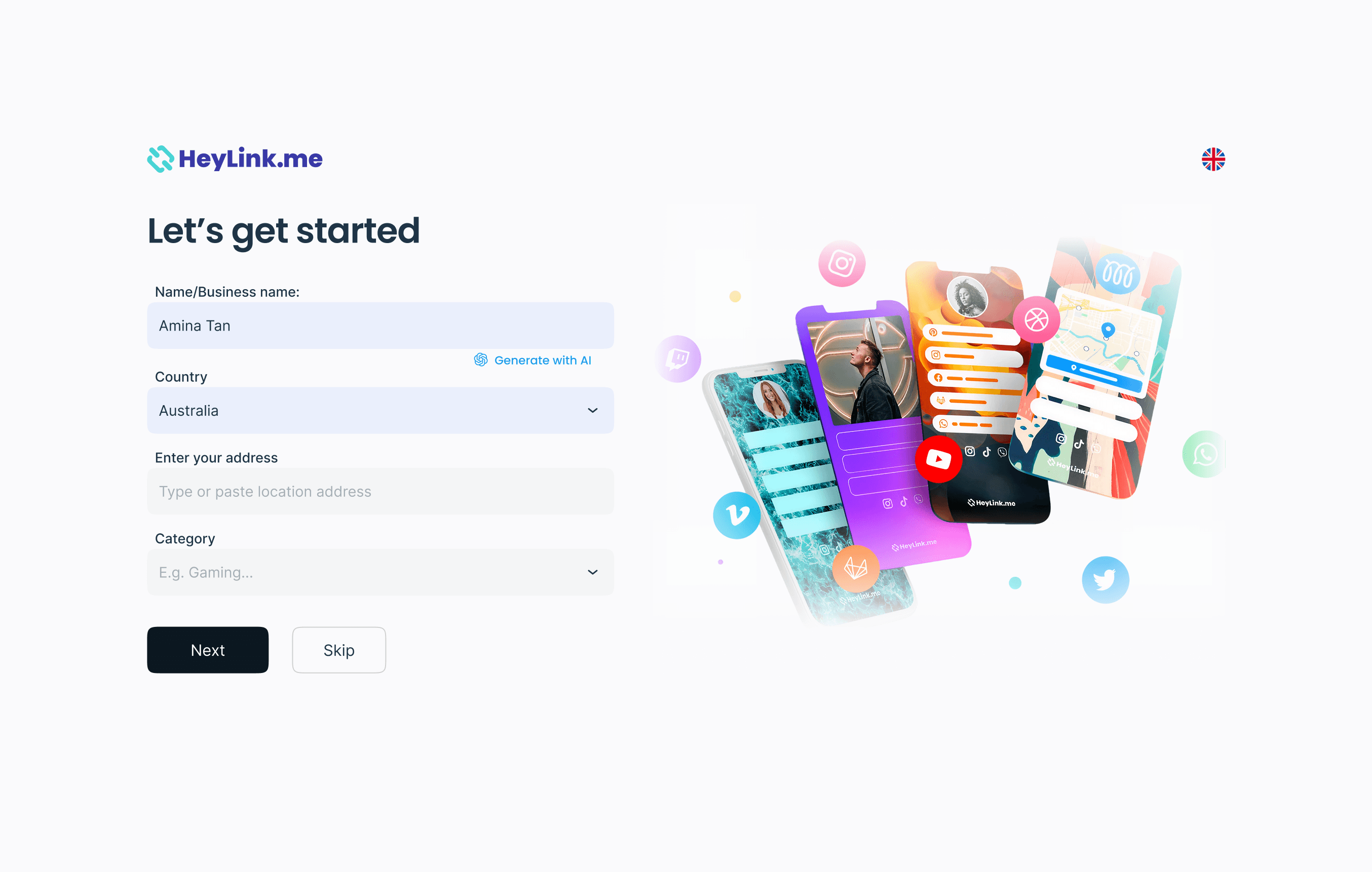
2. UX Redesign of Onboarding Flow
I proposed a simplified, progressive onboarding experience:
Broke the onboarding into smaller steps with one clear action per screen
Introduced visual feedback and previews after each key step
Reduced form inputs initially and allowed editing later.
3. UI Enhancements
I redesigned the layout to ensure a clean, focused experience.
4. Result
The redesigned onboarding flow led to:
A measurable increase in profile completion rates
A reduction in user drop-off during the first session
Better content activation (more links, banners, and branding added)
Outcomes
The redesigned onboarding flow and customizable profile features led to a noticeable increase in user engagement and profile completion rates. Feedback from users highlighted the improved clarity and ease of use. The new components and templates also sped up development of future features.